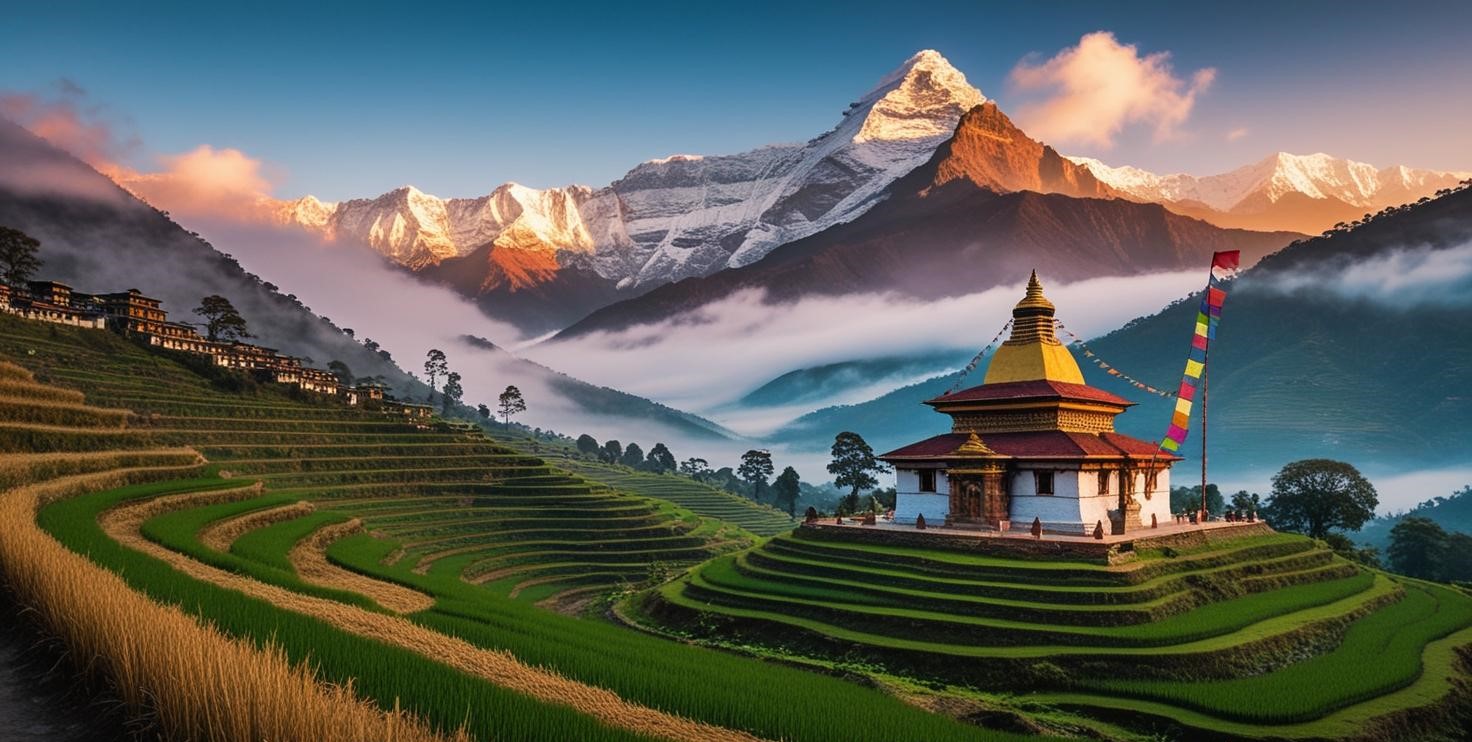
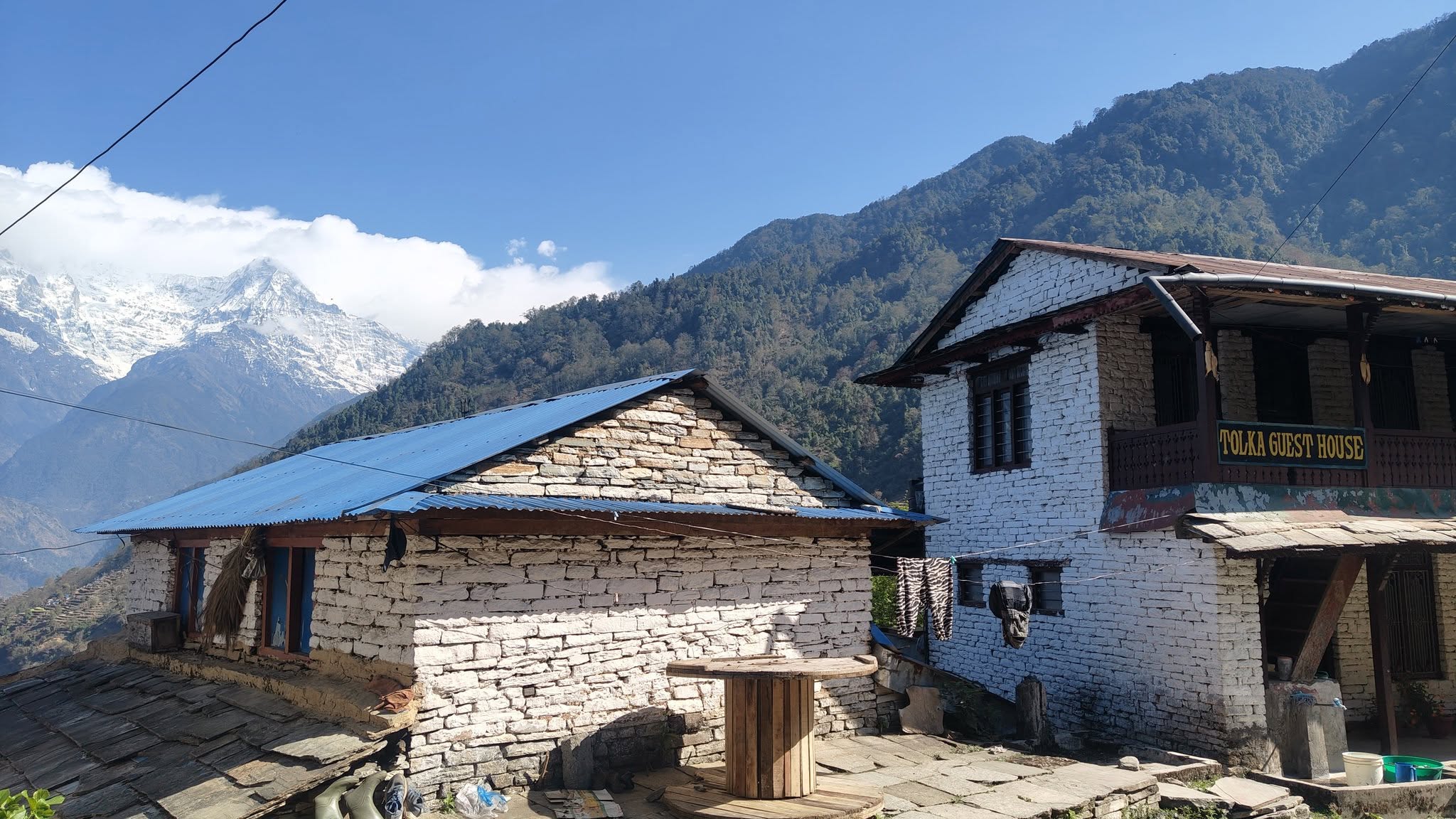
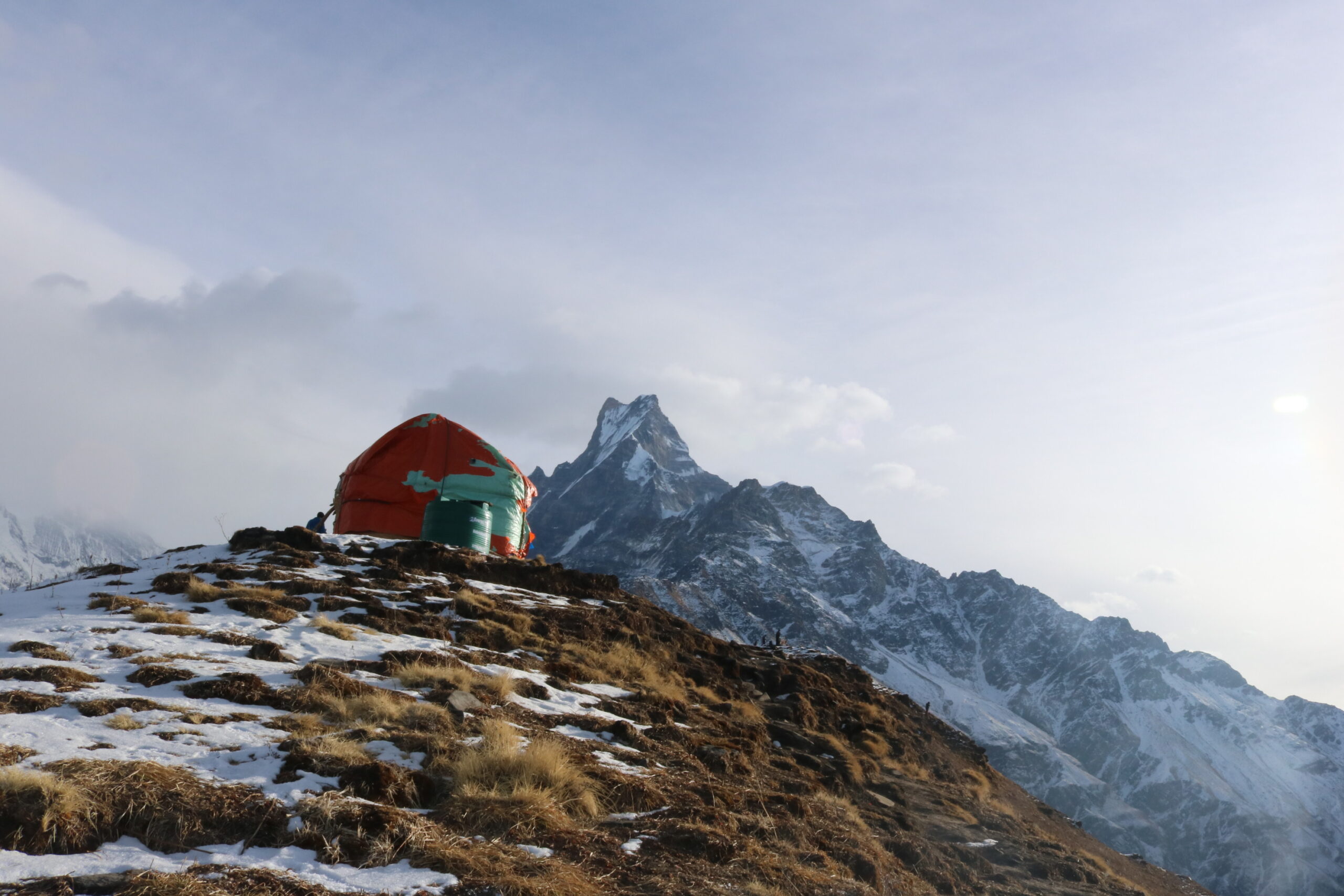
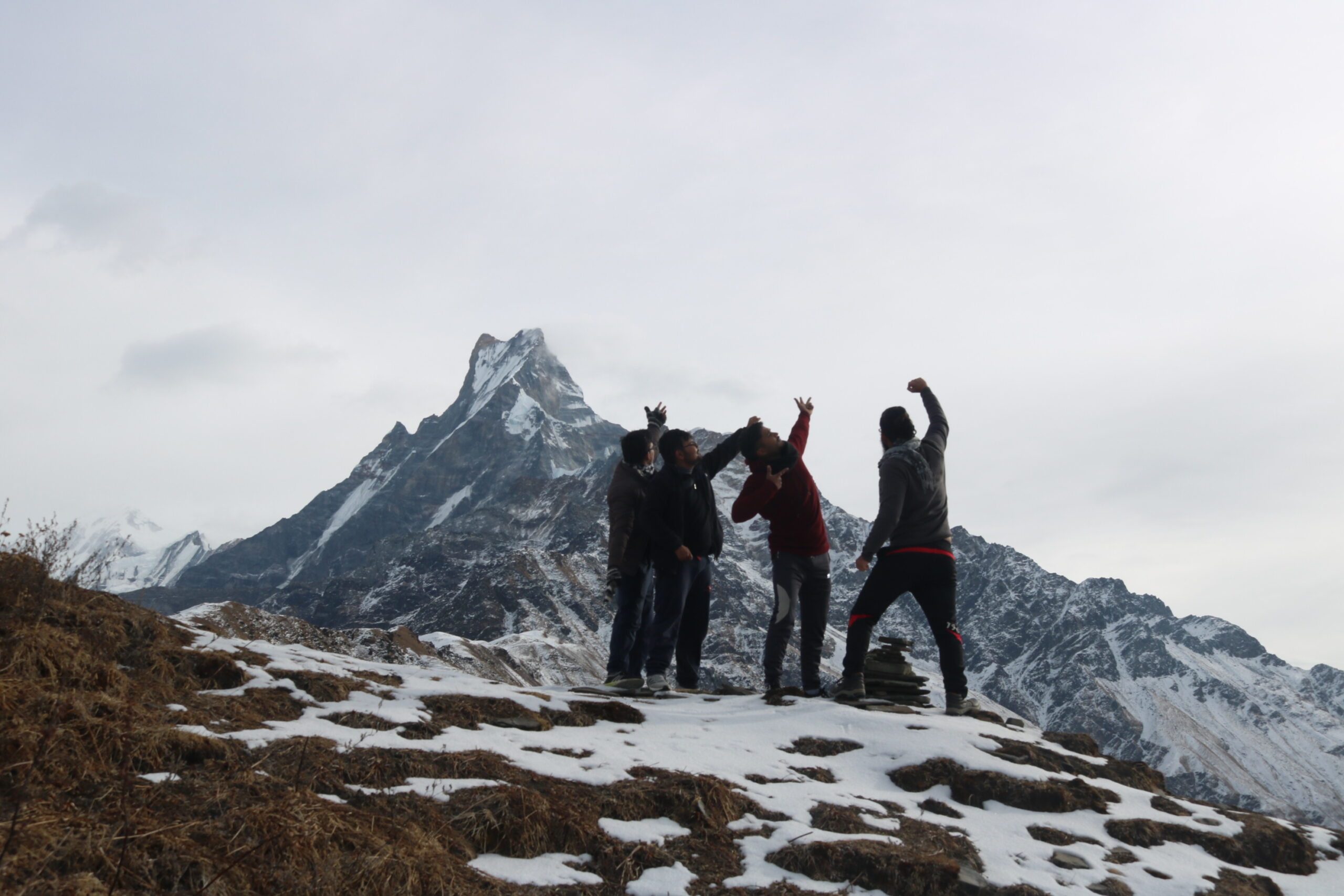
Inner Annapurna Circuit Trek is a combination of the three popular landmarks of the Annapurna region. The Khopra Ridge, Mardi Himal and the Annapurna Base camp. This trek is located within the Annapurna Conservation Area giving an immersive view of the local culture, traditions and cuisines. The snow-capped mountain landscapes and the lush green valleys are some of the main highlights of this trek.
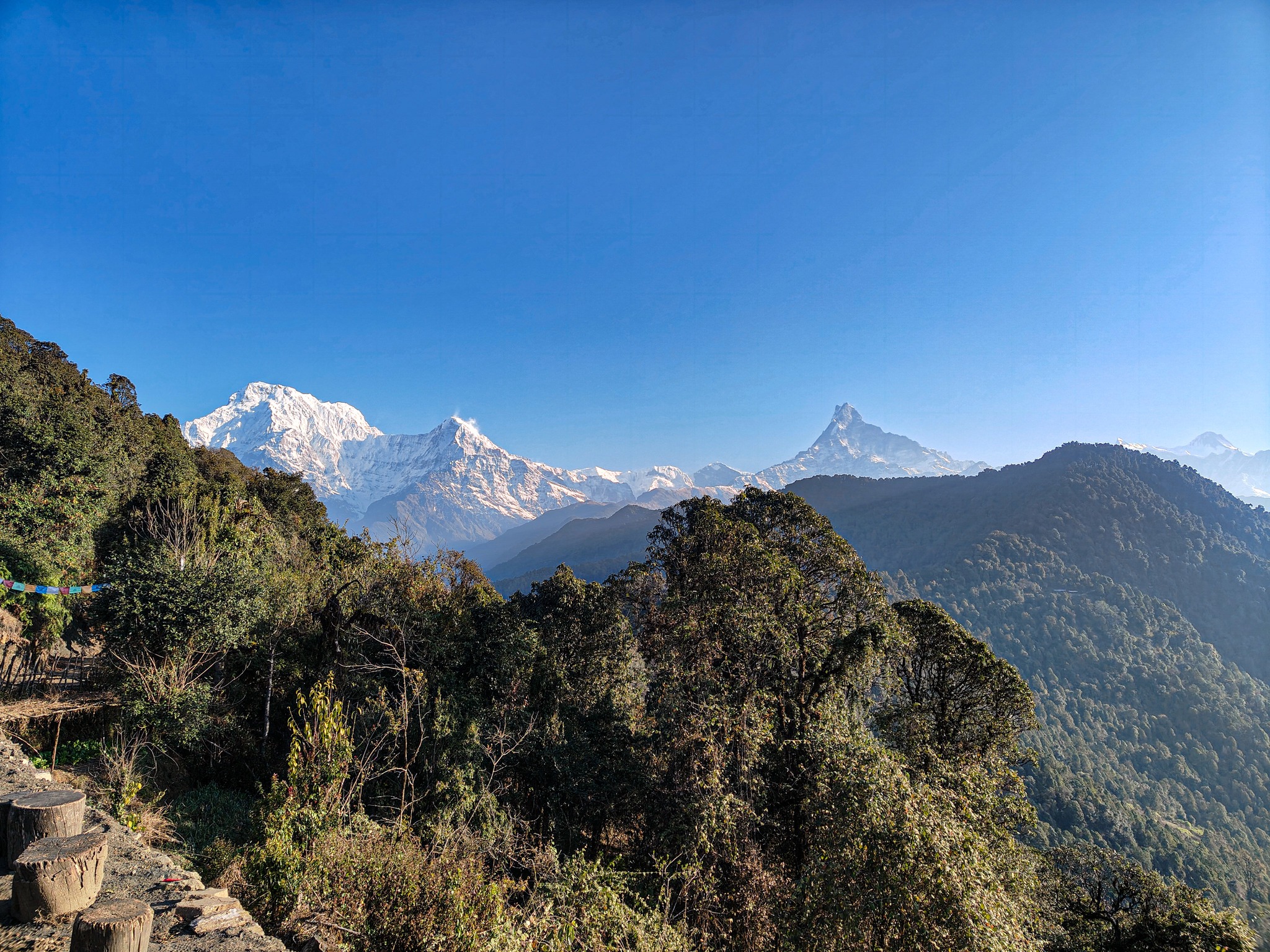
Unlike the traditional Annapurna Circuit, the “Inner Annapurna Circuit Trek” takes you deeper into the heart of the Himalayas. This has become possible primarily due to the newly built and more accessible road networks. Unveiling pristine trails, majestic peaks, and diverse landscapes of the Annapurna Sanctuary (4,130m). This immersive journey leads you from the terraced farmlands of the lowlands to the rugged alpine terrains, offering a comprehensive Himalayan experience. Along the way, you’ll have the opportunity to meet vibrant ethnic communities, including the Gurung and Magar people, who are known for their warm hospitality and rich traditions. As you ascend through rhododendron forests, and hilltops mesmerizing views of Annapurna (8,091m), Dhaulagiri (8,167m), Machhapuchhre (6,993m) (Mt. Fishtail), and Hiunchuli (6,441m) will surround you. The journey is dotted with glacial rivers, pristine waterfalls, and quaint villages, creating an unforgettable experience for every trekking enthusiast. Each step of the trek offers a breathtaking reward.
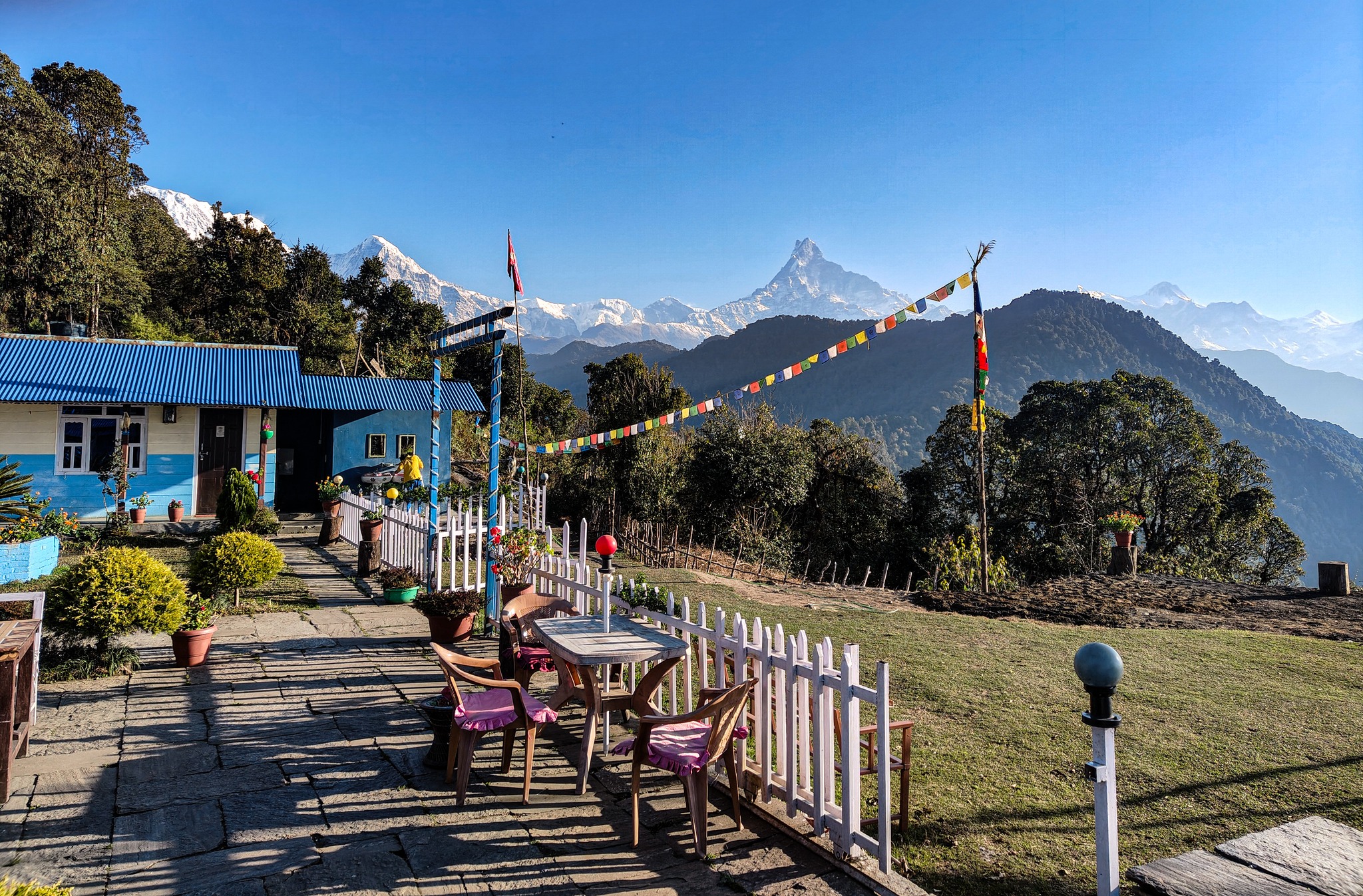
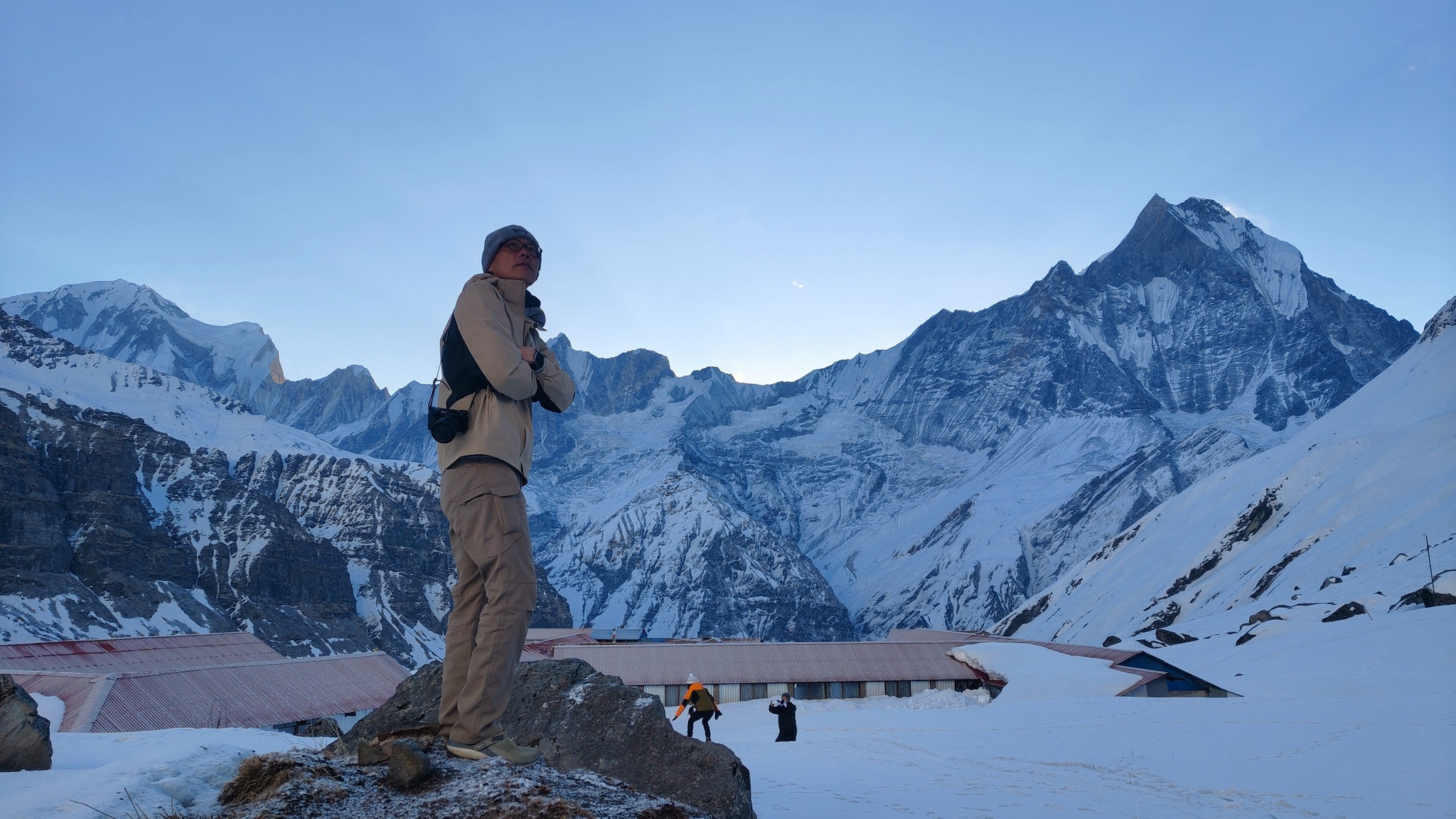
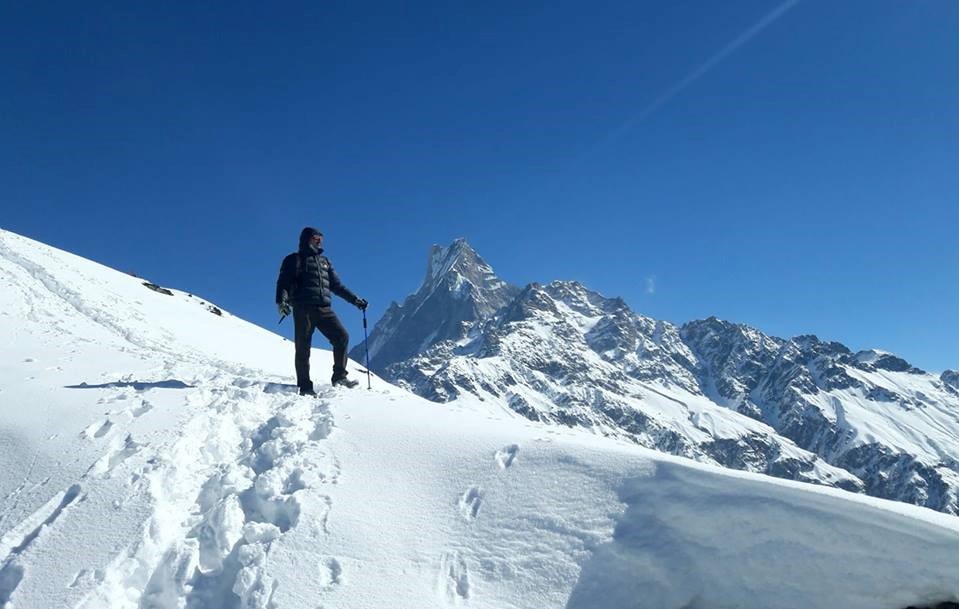
View of Mt. Fishtail from Mardi HimalMardi Himal, a hidden gem located in the Annapurna region. This off-the-beaten-path trail is celebrated for its stunning viewpoint at 4,500m, delivering panoramic vistas of the Annapurna South and Dhaulagiri ranges. Trekkers at the Mardi Himal Viewpoint can take in the awe-inspiring peaks of Machhapuchhre (Fishtail), Mardi Himal, and Annapurna South, especially during sunrise when golden light beautifully illuminates the snow-covered summits.The trail to Mardi Himal is less crowded compared to other trekking routes, making it perfect for those seeking tranquility. The journey begins from Deaurali, climbing through lush forests and quaint villages. In addition to the captivating mountain views, the trail not only unveils the region’s rich biodiversity but also highlights rare bird species and vibrant rhododendron blooms, especially during the spring. Villages along the route provide a glimpse into the local Gurung culture and traditions, adding to the trek’s appeal.
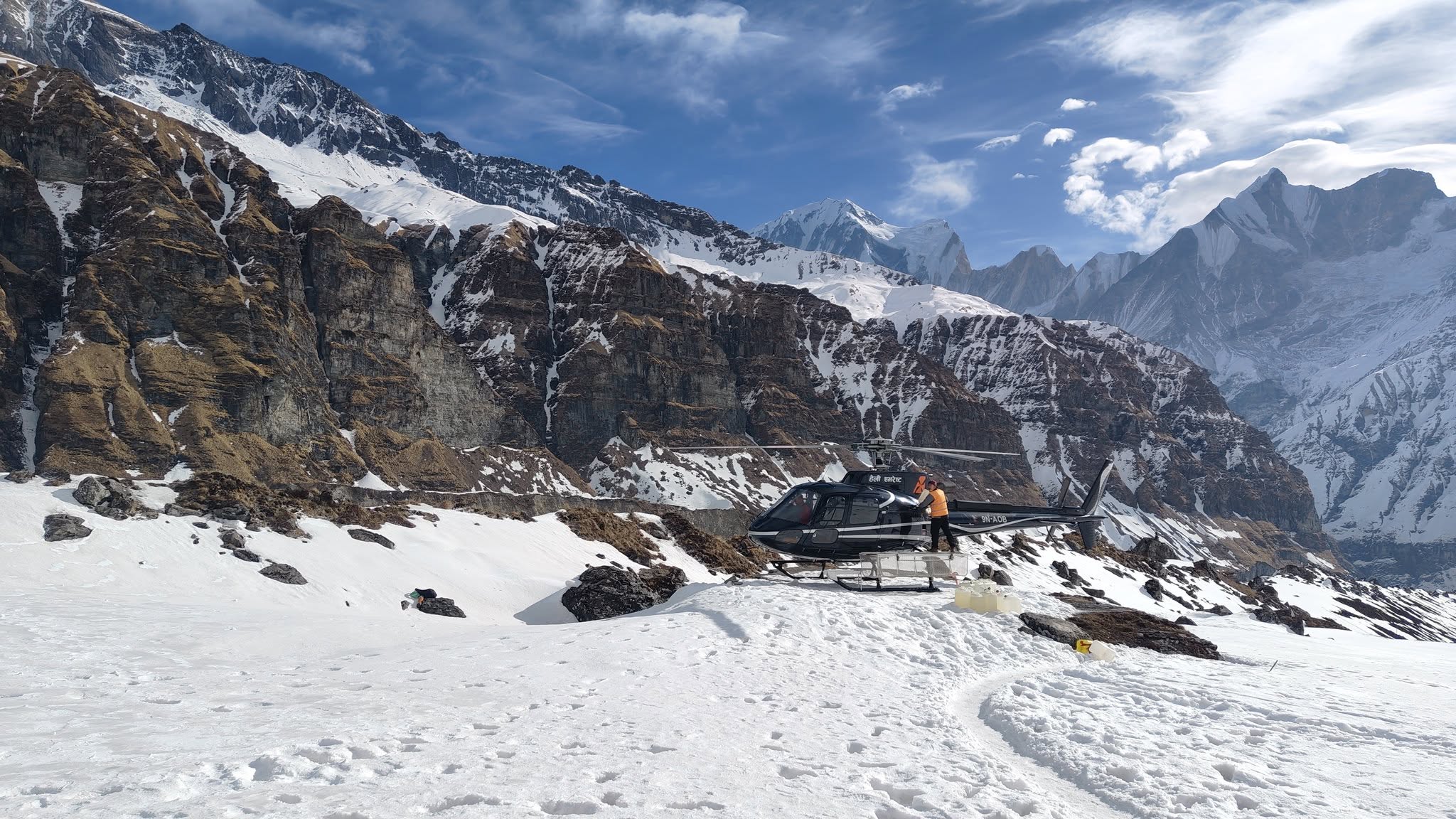
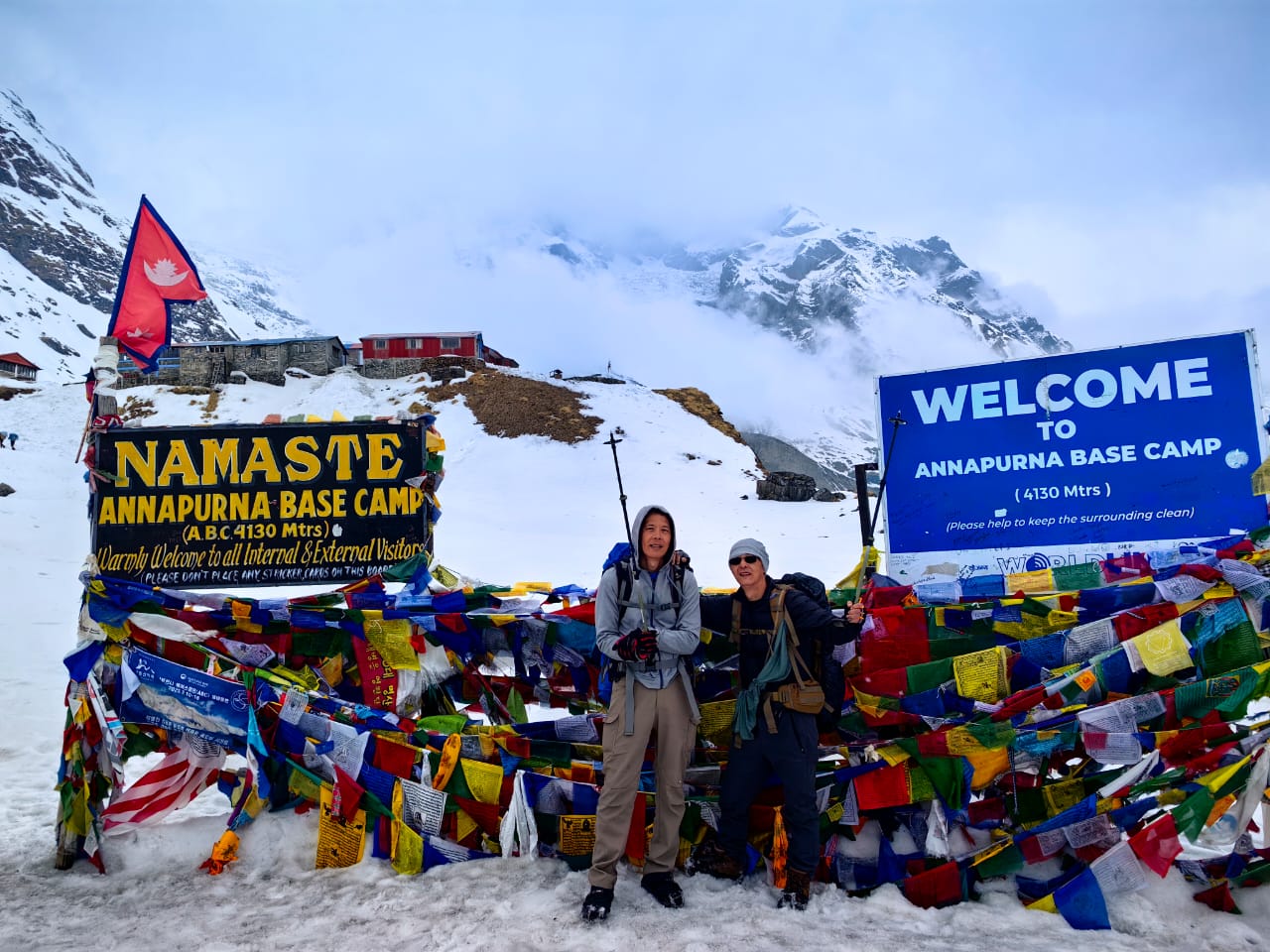
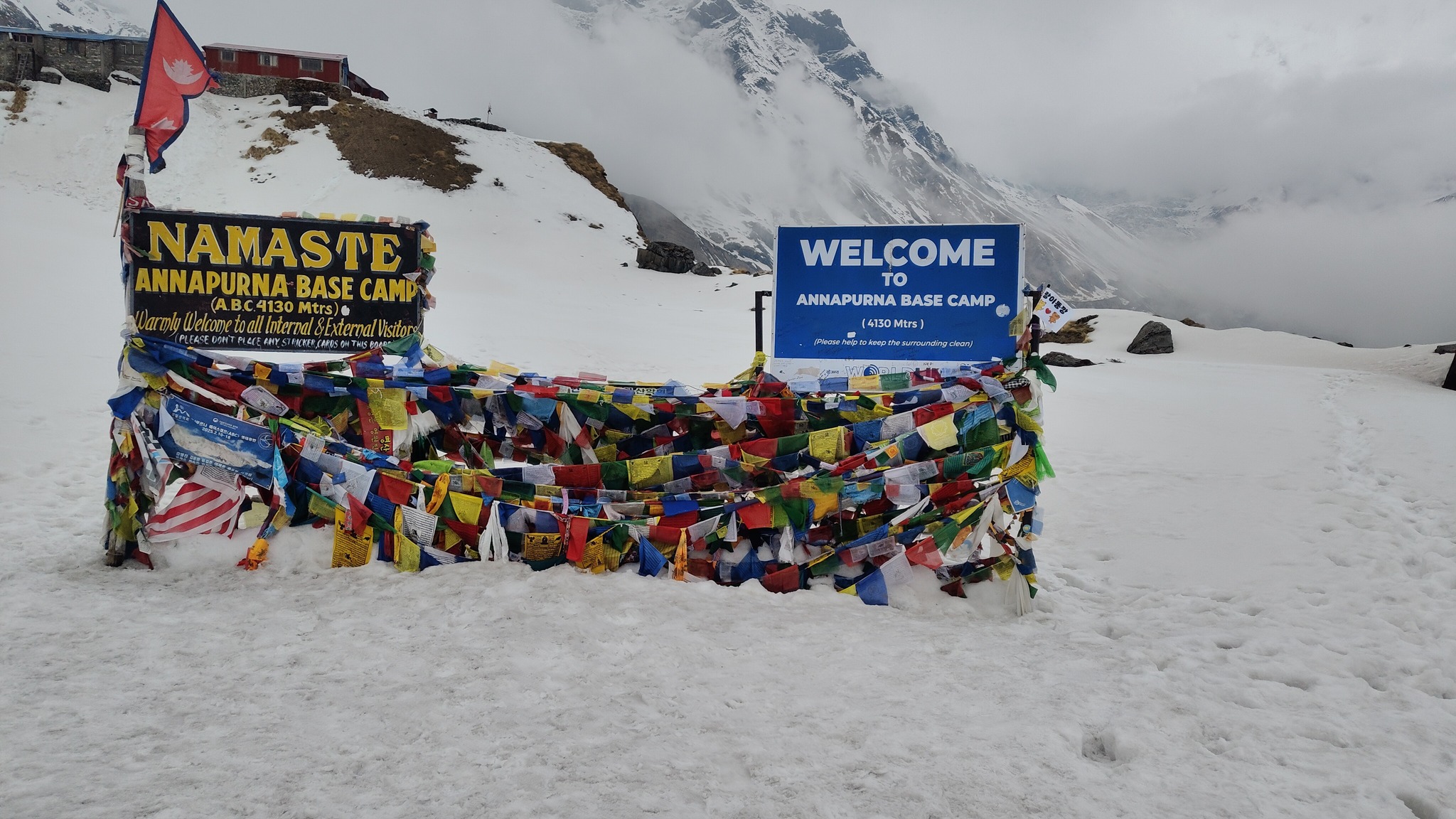
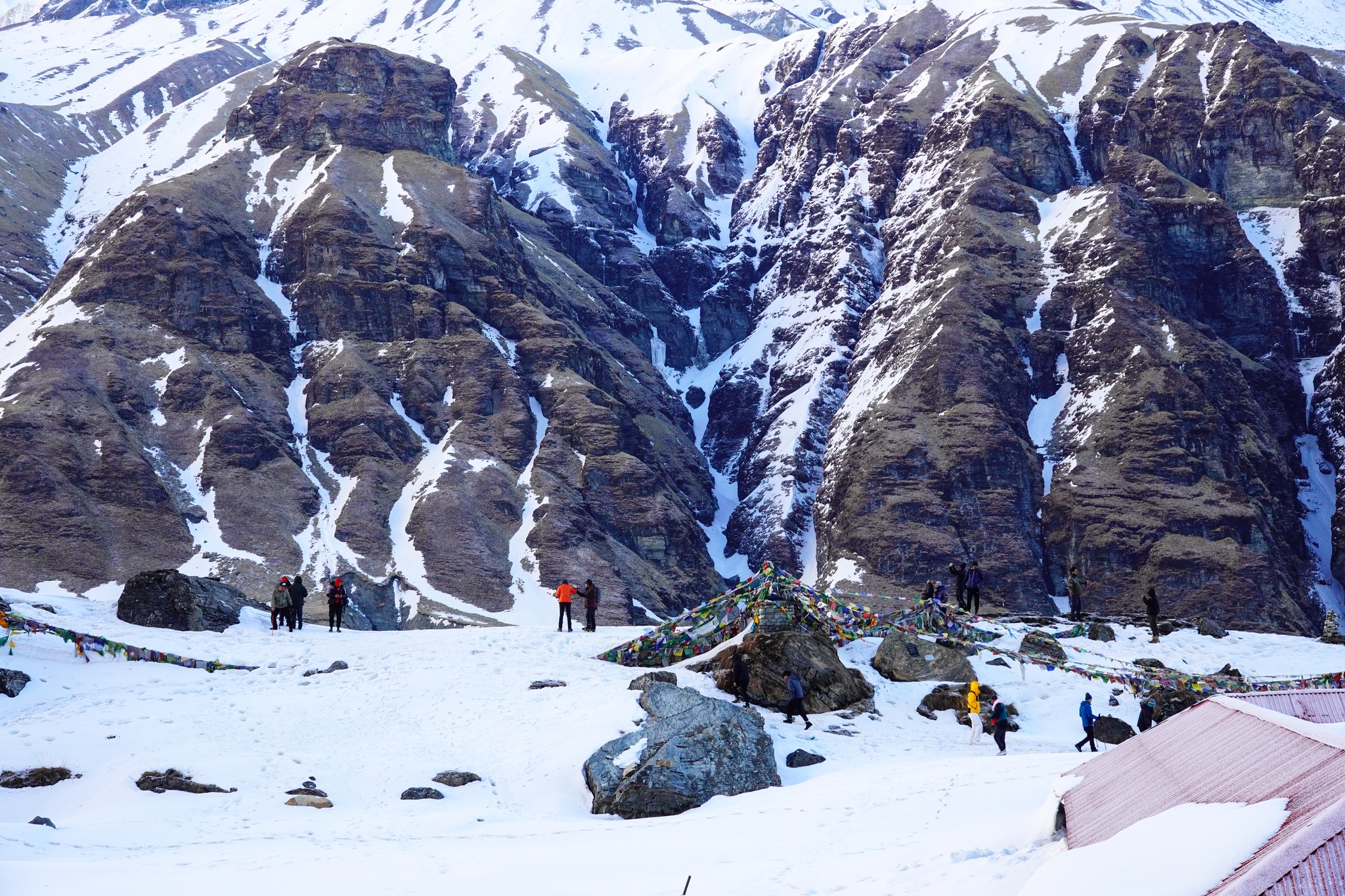
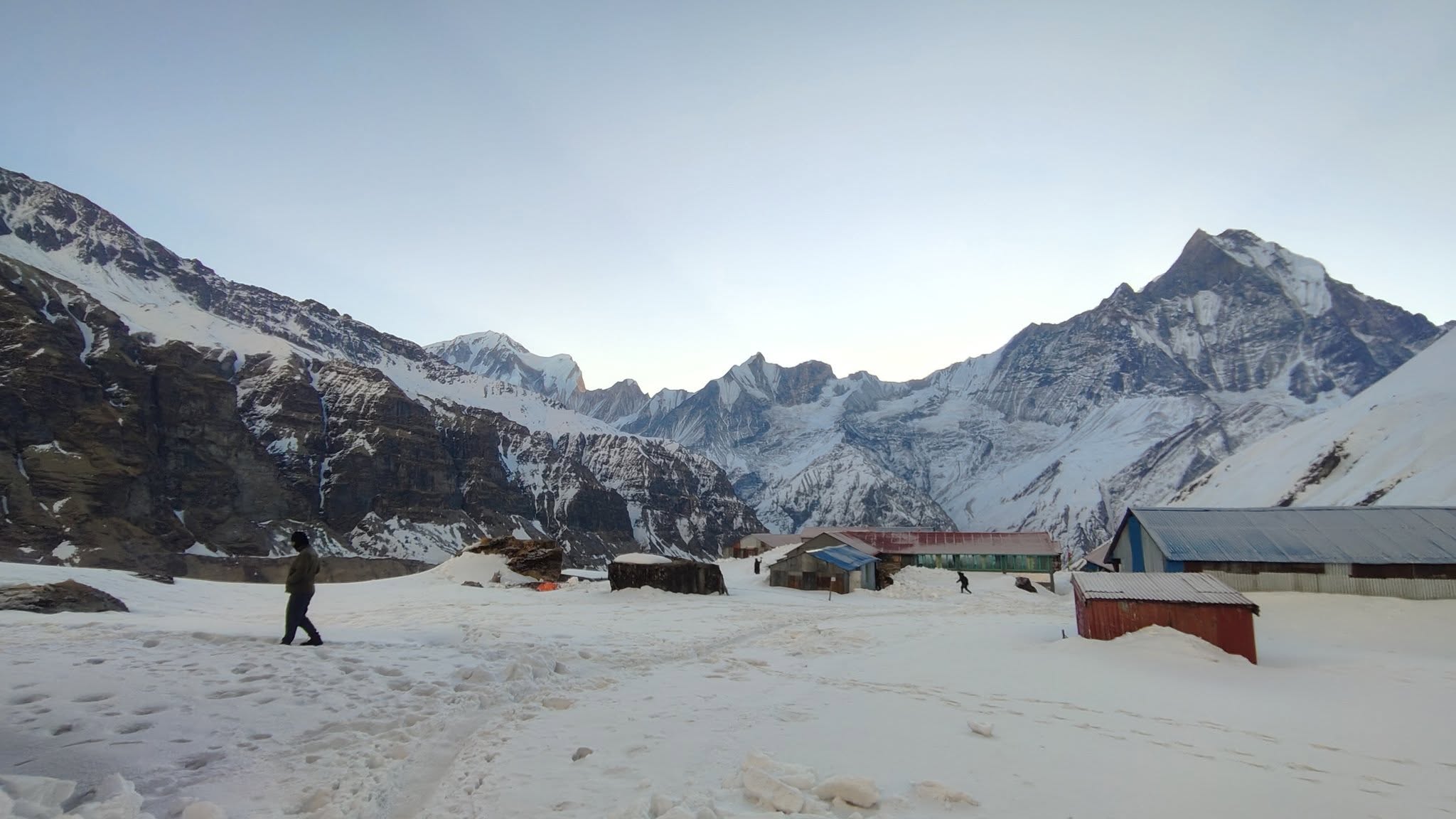
Annapurna Base Camp (ABC), situated at an altitude of 4,130m, a crown jewel of the Inner Annapurna Circuit Trek. Surrounded by towering peaks, including Annapurna I, III, and South, Machhapuchhre, and Hiuchuli. The base camp presents a surreal, amphitheater-like setting that feels both humbling and exhilarating. The journey to ABC is a visual treat, taking trekkers through terraced rice fields, bamboo forests, and charming villages. The traditional tea houses along the way serve as cosy resting spots, offering insight into the culture and hospitality of the Gurung and Thakali people. The final stretch to ABC passes through the Annapurna Sanctuary, a glacial basin renowned for its dramatic landscape and abundant biodiversity. Witnessing the sunrise over the snowy peaks from the base camp is an experience that stays with trekkers forever.
Khopra Ridge, standing at an elevation of 3,640m, is a standout feature of the Inner Annapurna Circuit Trek. It offers unparalleled views of the Annapurna and Dhaulagiri ranges. From this breathtaking vantage point, trekkers can enjoy panoramic views of majestic peaks. These include Nilgiri (7,061m), Tukuche Peak (6,920m), and Dhampus Peak (6,012m). Moreover, the trek to Khopra Ridge takes you through stunning and diverse landscapes. You’ll pass terraced fields, alpine meadows, and dense forests teeming with diverse flora and fauna. One of the major attractions here is the sacred Khayer Lake (4,500-4,665m), which holds religious significance among Hindus and Buddhists. Trekkers will enjoy the serene trails and have opportunities to interact with local Magar and Gurung communities, learning about their rich traditions. Khopra Ridge is a hidden treasure for those who seek less-explored paths in the Annapurna region.Annapurna Inner Circuit trek is a combination of nature, culture and heritage within the Annapurna region. This trail goes through the off- the-beaten destination of Khopra ridge and Mardi Himal. Throughout this trek, you’ll have the opportunity to fully immerse yourself in the daily lives and rich traditions of the local people. The unique cultural heritage, friendly nature of the locals and the landscape views make this trek a bucket-list-worthy destination for trekkers from around the globe.Spring (March to May) and autumn (September to November) are the best seasons for this trek. During these times, the weather is clear and as a result the landscapes come alive with vibrant colors. This transformation further enhances the trekking experience.

| Activity | Distance (km) | Duration (hours) | Altitude (m) |
|---|---|---|---|
| Drive to Pokhara from Kathmandu | 200 km | 7-8 hours | 800 m | 2, 625ft |
| Drive to Kande and Trek to Deurali | 27 km | 5.5 km | 1 hour | 4 hours | 2,100 m | 6, 720 ft |
| Trek to Low-Camp from Deurali | 6.8 km | 5-6 hours | 2,600 m | 8, 530 ft |
| Trek to High- camp from Low camp | 8.5 km | 6-7 hours | 3,550 m | 11, 646 ft |
| Trek to Mardi Himal viewpoint (4,200m) and then to Badal Danda | 12 km | 7-8 hours | 4,200 m | 13, 780 ft |
| Trek to Landruk from Badal Danda | 5.6 km | 6-7 hours | 1,565 m | 5, 134 ft |
| Trek to Chhomrung via Jhinu danda | Ascend: 605 m | 8.5 km | 6-7 hours | 2, 170 m | 7, 119 ft |
| Trek from Chhomrong to Bamboo | 7 km | 5-6 hours | 2, 310 m | 7,578 ft |
| Trek from Bamboo to Deaurali | Ascend: 730 m | 8-10 km | 6-7 hours | 3,230 m | 10, 597 ft |
| Trek to Annapurna Base Camp via MBC. Ascend: 900 m | 8 km | 6-7 hours | 4, 130 m | 13, 550 ft |
| Trek from ABC head back to Bamboo | Descend: 1820 m | 16 km | 7-8 hours | 2, 310 m | 7,578 ft |
| Trek from Bamboo to Komrong | Ascend: 834 m | 8 km | 6-7 hours | 2, 654 m | 8, 707 ft |
| Trek from Komrong to Tadapani. | 4 km | 3-5 hours | 2, 630 m | 8, 628 ft |
| Tadapani to Dobato | Ascend: 720 m | 6.5 km | 5-6 hours | 3,350 m | 10, 990 ft |
| Dobato to Chistibang | Descend: 350 m | 6 km | 5-6 hours | 3,000 m | 9, 842 ft |
| Trek to Khopra Danda (Ridge) | Ascend: 660m | 5 km | 4-5 hours | 3,660 m | 11,811 ft |
| Trek to Swanta from Khopra danda | Descend: 1, 446 m | 9.6 km | 5-6 hours | 2,214 m | 7,874 ft |
| Trek to Ghorepani Swanta village | Ascend: 536 m | 9 km | 5-6 hours | 2,750 m | 9, 022 ft |
| Sunrise from Poonhill and trek to Mohare Dada | 10 km | 6-7 hours | 3, 300 m | 10, 826 ft |
| Trek to Lespar (2,062) and Drive to Pokhara. | 5 km | 105 km | 4 hours | 4 hours | 800 m | 2,52 ft |
| Drive /fly to kathmandu | 200 km | 7-8 hours | 30 minutes fly | 1, 350 m | 4,230 ft |
Traveler’s note: Today there are high chances to spot Nepal’s national animal the Daphne Pheasant! At High Camp we get see incredible views of the Annapurna South, Hinchuli and of course Mt. Machhapuchhre. Tomorrow we head for Base Camp so make sure your cameras are ready!
On the way to Base Camp we can see a lot of the local herbivores grazing such as sheep, yaks and goats along with Daphne Pheasants. From Base Camp we can see amazing views of the Annapurna South, Sanctuary Peak, Mardi Himal, Hinchuli and Mt. Machhapuchhre! overnight stay at Badaldanda or Low-Camp.
you will descend through beautiful forests to reach Landruk, a charming village inhabited by the Gurung community. Enjoy the traditional hospitality of the locals and immerse yourself in their rich culture and traditions. overnight stay at Landruk.
The trail starts off with a descent through the Beautiful Gurung village. First, You can enjoy the hot springs near Jhinu Danda and relax your body. These waters are believed to have healing properties and are a great option to relax following days of climbs and drops.
The trail opens up to the terraced fields and climbs uphill to reach a suspension bridge. After a few more uphill and downhill walk, you arrive at Chhomrong which is situated right below the Annapurna massif. Overnight stay at Chhomrong.
You leave Chhomrong and walk on numerous stone steps before reaching Chhomrong Khola. You cross the river on a suspension bridge and climb uphill to Sinuwa. The trail then passes through the forest and makes an easy descent to Bamboo. You will follow the Modi River on the later stages as you play hide and seek with the Himalayas. Overnight stay at Bamboo.
Heading out of Bamboo village, you ascend through sparsely separated forests and head to Himalaya. You trek across Hinku Cave and follow the trail that begins to follow Modi River. The trail continues along with minor descents and finally an ascent takes you to Deurali. At Deurali, you can enjoy the views of the Himalayas and enjoy your stop here. Overnight stay at Deurali.
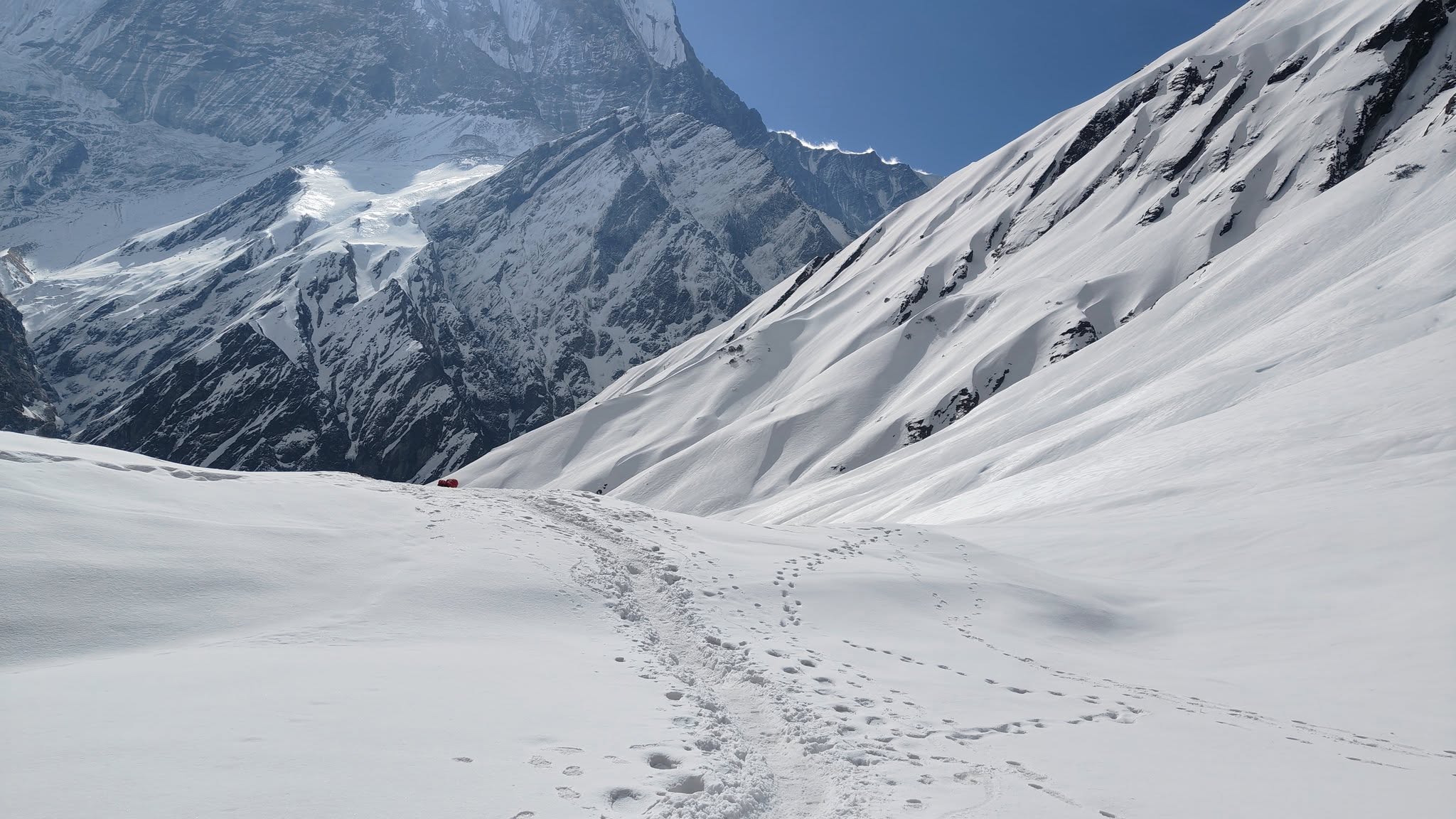
From Deurali, you begin on an uphill climb to Machhapuchhre Base Camp. The base camp is just a namesake as Mt. Machhapuchhre has never been climbed. However, the scenic views are sublime here and you continue on the trek relishing these views. A strenuous walk along snowy trails and snowy paths takes you to Annapurna Base Camp. The base camp is the trail-head to the expeditions of Annapurna I (8091m) and presents Himalayan panorama in an exuberant scale. Overnight stay at Annapurna Base camp.
Today’s trek is entirely downhill and while it might not be as difficult as the ascent, you must certainly exercise caution on the descent as well.The trail descends past Machhapuchhre Base Camp,Deurali, Himalaya,Dobhan, and finally takes you to Bamboo. The Himalayas offer you sublime company as you follow the Modi River to Bamboo. Overnight stay at Bamboo.
From Bamboo, it is an uphill trek till Kuldighar then a downhill walk to Chhomrong Khola. You climb the stone steps to reach Chhomrong. and then descend to Jhinu Danda, taking a different route from the earlier one when we made the ascent. You can enjoy the hot springs near Jhinu Danda and relax your body. These waters are believed to have healing properties and are a great option to relax following days of climbs and drops. Overnight stay at Jhinu Danda.
After breakfast in Tadapani, you’ll leave the main trail and will begin walking in a more remote area of the Annapurna region, through beautiful rhododendron forest. This off-the-beaten-path trail crosses beautiful Nepali villages and a variety of flora, fauna, and ancient trees. After a short climb and descent into a dell, you’ll start a more serious climb that continues all the way up to the lodges at Dobato. overnight stay at Dobato.
we will start our trek to the village of Chistibang through beautiful dense rhododendron forest. En route, we can witness stunning mountains in the Annapurna massif. overnight stay at Chistibang.
Today, you will continue your journey towards the beautiful Khopra Danda. As you ascend higher, the landscape transforms into alpine meadows with panoramic views of the Annapurna and Dhaulagiri ranges. Khopra Danda is a stunning viewpoint that offers a close-up view of the magnificent mountains. overnight stay at Khopra danda
Leaving Khopra Danda, you will descend through terraced fields and charming villages. The trail takes you through the village of Swanta, where you can experience the local culture and interact with the friendly villagers. Enjoy the serene atmosphere and relax for the night. overnight stay at Swanta village.
As you continue your trek, you will pass through rhododendron forests and picturesque landscapes. The trail gradually ascends to Ghorepani, a popular stopover for trekkers. Ghorepani offers stunning views of the Annapurna and Dhaulagiri ranges, especially during sunrise and sunset. overnight stay at Ghorepani.
During our Inner Annapurna Circuit Trek , we can enjoy authentic Nepalese food as well the more common international cuisine (Tibetan, Continental, Italian, Indian, etc.). Breakfast and dinner will be served from the tea-houses or from a lodge menu where we spend the night whereas lunch will be served on the way to the next destination. All meals will be provided during trekking while only breakfast will be available while in Kathmandu and Pokhara. There will also be welcome and farewell dinners for guests.
We will be staying at Hotel Pokhara Batika in Pokhara or similar, and in tea houses during the trek. All accommodations are on a twin-share basis. A single supplement is available upon request for an additional USD 175. While single rooms are generally available in Kathmandu and the lower trekking regions, they may be difficult to find at higher elevations.
| Start Date | End Date | Total Person | Price From |
|---|---|---|---|
| October 1, 2027 | October 20, 2027 | 10 | $1850 |
| October 14, 2026 | November 3, 2026 | 10 | $1850 |
| Start Date | End Date | Total Person | Price From |
|---|---|---|---|
| November 5, 2026 | November 24, 2026 | 10 | $1850 |
| November 1, 2026 | November 20, 2026 | 10 | $1850 |
| November 12, 2027 | December 2, 2027 | 10 | $1850 |
| Start Date | End Date | Total Person | Price From |
|---|---|---|---|
| March 3, 2027 | March 22, 2027 | 10 | $1850 |
| March 19, 2027 | April 8, 2027 | 10 | $1850 |
| March 9, 2027 | March 30, 2027 | 10 | $1850 |
| Start Date | End Date | Total Person | Price From |
|---|---|---|---|
| April 2, 2027 | April 22, 2027 | 10 | $1850 |
| April 17, 2027 | May 7, 2027 | 10 | $1850 |
| April 5, 2028 | April 24, 2028 | 10 | $1850 |
| Start Date | End Date | Total Person | Price From |
|---|---|---|---|
| May 4, 2027 | May 23, 2027 | 10 | $1850 |
| May 10, 2027 | May 30, 2027 | 10 | $1850 |
| May 7, 2028 | May 27, 2028 | 10 | $1850 |
| Start Date | End Date | Total Person | Price From |
|---|---|---|---|
| September 16, 2027 | October 6, 2027 | 10 | $1850 |
| September 20, 2028 | October 10, 2028 | 10 | $1850 |
| Start Date | End Date | Total Person | Price From |
|---|---|---|---|
| December 5, 2027 | December 25, 2027 | 10 | $1850 |
| December 15, 2028 | January 4, 2029 | 10 | $1850 |
Trekkers need permits to enter the Annapurna Conservation Area. These are arranged by trekking agencies or can be obtained in Kathmandu or Pokhara.
The required permits are:
To get these permits, you’ll need:
Packing smart is key for a successful trek in the Annapurna region. You don’t need fancy gear—just the right essentials to keep you comfortable and prepared. Here’s what you should bring:
Most trekking gear is available for rent or purchase in Kathmandu, especially in Thamel. To keep your load light, bring only the essentials and get the rest there. Many hotels also offer free storage for extra luggage, but make sure to always use a lock for security.
Internet Connectivity differs from place to place. While internet connectivity and network towers may experience irregular connection and lags. Wi-Fi is available at most teahouses, but it can be slow and costly. Some lodges charge per hour or device. You can also use local SIM cards (NTC or Ncell), which provide good mobile data coverage in lower areas, but connectivity might weaken at higher altitudes.
For a more reliable internet connection, you can buy an Everest Link prepaid Wi-Fi card, available at teahouses along the trekking routes. Overall network connection can be found in most of the places on this trek.
Spring (March to May) and autumn (mid-September to December) are usually considered the best seasons for trekking in the Annapurna region. During these months, the weather is dry and clear, making it ideal for hiking and unobstructed scenic mountain viewing of the landscapes. The days are warm, and the nights are cool. On the downside, these are peak seasons, so the trails become crowded and busy.
The trail of the Annapurna region winds through a pristine forest teeming with wildflowers and orchids in spring. Walking through the hills covered with wildflowers against the backdrop of the majestic Himalayas will feel lovely.
Autumn is the most popular season and optimal for trekking in the Annapurna region. After the settling of dust and impurities after the rainy season, you can enjoy crystal clear views of the landscapes. The conclusion of the wet monsoon season clears the skies of dust and contaminants, allowing you to enjoy crystal-clear views. Trekking in late September or October allows you to experience Nepal’s most important festivals, Dashain and Tihar. These festivals are celebrated by the Ghales, Gurungs, Brahmins, Newars, and Nepalese all over the world. During these festive seasons, you can see the festive environment all over Nepal.
The winter season in Nepal is from late November to February. This season, a lesser number of travelers are seen due to the cold weather. Nonetheless, this season is ideal for the brave and travellers who want to experience the trek with lesser crowds. Trekking in the mountainous region during these months gives you cultural insights into the Buddhist villages.
The Annapurna Region includes high-altitude treks, with some routes reaching over 5,400m. Thorong La Pass(5,416m), Kang La Pass (5,320) m are some of the highest passes in the Annapurna Region. At these high altitudes, oxygen levels drop, which can lead to altitude sickness (AMS).
To acclimatize properly:
The Inner Annapurna circuit trek offers a mix of challenging trails, high passes, and unpredictable weather. Having an experienced local guide is invaluable for navigation, safety, and cultural insights.
Our trekking groups are led by licensed guides with years of experience in the Annapurna region. For every 10 trekkers, we provide an assistant guide for additional support. Porters help carry luggage, with one porter assigned to two trekkers (each carrying up to 30kg). Keep your baggage under 15kg to make it manageable.
We believe in fair treatment for our staff. All guides and porters receive fair wages, proper gear for the mountains, and insurance coverage. We follow the ethical guidelines of the International Porter Protection Group (IPPG) to ensure their well-being. A portion of our booking fee also supports the education of our staff’s children.
Your safety is our priority. We follow a well-planned itinerary with enough acclimatization days to minimize altitude sickness. Our guides are trained in first aid, altitude sickness management, and crisis handling. They carry first-aid kits and pulse oximeters to monitor oxygen levels.
If anyone in the group experiences altitude sickness, we take immediate action. Mild cases are managed with rest and hydration, while severe cases require descent or evacuation. An assistant guide will always accompany trekkers needing extra care.
Trekking responsibly is important to protect the Annapurna region’s natural beauty and local communities. Here’s how you can contribute:
We partner with eco-friendly service providers and support sustainable tourism initiatives. As members of KEEP (Kathmandu Environmental Education Project), we actively promote environmental conservation and responsible trekking practices.
By choosing to trek with Corporate Adventure Treks, you’re not just exploring the mountains—you’re supporting the people who call them home.
Trekking in the Annapurna region takes you to altitudes above 5,000 meters, where the risk of altitude sickness and other emergencies increases. A good travel insurance policy is a must.
Make sure your insurance covers:
Even with precautions, emergencies can happen, so check your policy thoroughly before your trip.